Herpes Simplex Virus
Introduction
The Herpes Simplex Virus (HSV) is one of the most common viral infections worldwide, affecting millions of people across all age groups. Although often misunderstood and stigmatized, HSV is a manageable condition when properly understood. This virus primarily causes oral and genital herpes, leading to recurrent sores and discomfort. In many cases, individuals may carry the virus without showing noticeable symptoms, making awareness and education extremely important.
Table of Contents
What Is Herpes Simplex Virus?
The Herpes Simplex Virus is a DNA virus belonging to the Herpesviridae family. Once the virus enters the body, it remains there for life in a dormant (inactive) state, periodically reactivating under certain conditions.
HSV infects the skin and mucous membranes and is characterized by painful blisters or sores. While the virus cannot be completely cured, it can be effectively controlled with antiviral medications and lifestyle management.
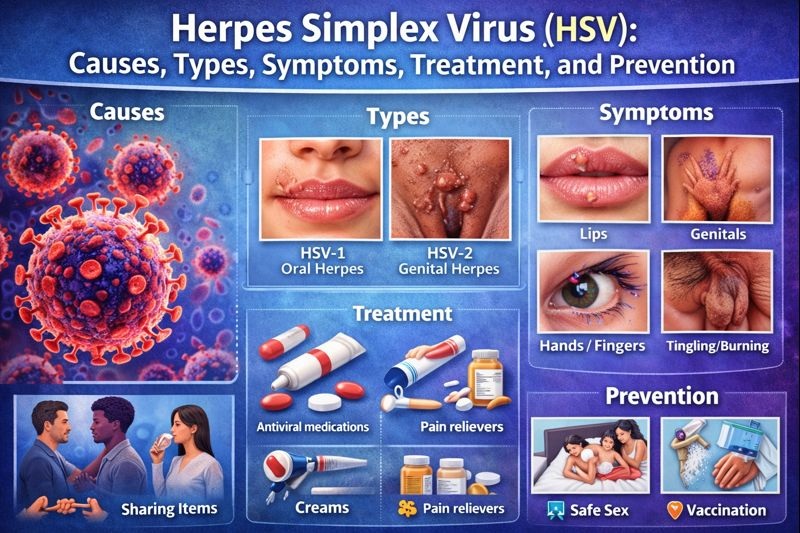
Types of Herpes Simplex Virus
There are two main types of HSV:
1. HSV-1 (Herpes Simplex Virus Type 1)
- Commonly causes oral herpes
- Leads to cold sores or fever blisters around the mouth and lips
- Usually transmitted through oral-to-oral contact
- Can also cause genital herpes through oral-genital contact
2. HSV-2 (Herpes Simplex Virus Type 2)
- Primarily causes genital herpes
- Spread mainly through sexual contact
- Results in painful blisters or sores in the genital or anal area
- More likely to recur frequently than HSV-1
How Does Herpes Simplex Virus Spread?
HSV spreads through direct contact with an infected person, even if visible sores are not present.
Common Modes of Transmission
- Kissing (HSV-1)
- Oral, vaginal, or anal sex (HSV-2)
- Skin-to-skin contact with infected areas
- Sharing personal items like lip balm or razors (rare)
- From mother to baby during childbirth (neonatal herpes)
Important: HSV can spread during asymptomatic shedding, meaning a person can transmit the virus without visible symptoms.
Symptoms of Herpes Simplex Virus
Symptoms vary widely from person to person. Some individuals experience severe outbreaks, while others have mild or no symptoms at all.
Early Symptoms (Prodromal Stage)
- Tingling or itching sensation
- Burning feeling
- Mild pain in the affected area
Common Symptoms
- Painful blisters filled with fluid
- Open sores after blisters burst
- Redness and swelling
- Fever and body aches (during first outbreak)
- Swollen lymph nodes
- Pain during urination (genital herpes)
First Outbreak vs. Recurrent Outbreaks
- The first outbreak is usually the most severe
- Recurrent outbreaks are typically shorter and milder
- Frequency decreases over time for most people
Diagnosis of Herpes Simplex Virus
Doctors use several methods to diagnose HSV:
Diagnostic Methods
- Physical examination of sores
- Viral culture test from blister fluid
- PCR test (highly accurate)
- Blood tests to detect HSV antibodies
Early diagnosis helps in better management and prevention of transmission.
Treatment Options for Herpes Simplex Virus
Currently, there is no permanent cure for HSV. However, treatments can significantly reduce symptoms, outbreak frequency, and transmission risk.
Antiviral Medications
Commonly prescribed antiviral drugs include:
- Acyclovir
- Valacyclovir
- Famciclovir
These medications:
- Shorten outbreak duration
- Reduce pain and discomfort
- Lower the risk of spreading the virus
- Help suppress frequent outbreaks
Supportive Care
- Pain relievers
- Warm baths
- Keeping affected areas clean and dry
- Wearing loose clothing
Prevention of Herpes Simplex Virus
Preventing HSV requires awareness, communication, and protective measures.
Effective Prevention Strategies
- Avoid direct contact during active outbreaks
- Use condoms consistently (reduces risk, not 100%)
- Do not share personal items during outbreaks
- Take daily antiviral medication (suppressive therapy)
- Open communication with sexual partners
Living with Herpes Simplex Virus
Being diagnosed with HSV can be emotionally challenging, but most people live healthy and normal lives with proper management.
Lifestyle Tips
- Manage stress (stress triggers outbreaks)
- Maintain a strong immune system
- Get adequate sleep
- Eat a balanced diet
- Avoid known outbreak triggers
Mental and Emotional Health
- Educate yourself about the condition
- Seek support groups or counseling
- Understand that HSV is common and manageable
Complications Associated with HSV
While generally not life-threatening, HSV can lead to complications in certain cases:
- Neonatal herpes (serious risk to newborns)
- Eye infections (herpes keratitis)
- Increased risk of HIV transmission
- Severe infections in immunocompromised individuals
Myths and Facts About Herpes Simplex Virus
Myth: Only sexually active people get herpes
Fact: HSV-1 can spread through non-sexual contact like kissing
Myth: Herpes always causes symptoms
Fact: Many people remain asymptomatic
Myth: Herpes ruins your life
Fact: With treatment, people live normal lives
Frequently Asked Questions (FAQ)
Is Herpes Simplex Virus curable?
No, but it is highly manageable with antiviral medications.
Can herpes go away on its own?
Symptoms may disappear, but the virus remains dormant in the body.
Can I have a healthy relationship with HSV?
Yes, with honest communication and preventive measures.
Conclusion
The Herpes Simplex Virus is a widespread and manageable viral infection that affects people globally. Although there is no cure, modern antiviral treatments, preventive strategies, and lifestyle management allow individuals to control symptoms effectively and maintain a good quality of life.
Understanding HSV helps reduce stigma, encourages early diagnosis, and promotes responsible health practices. Awareness is the key to prevention, treatment, and living confidently with the condition.
About the Author