What to Know About Methylene Blue
What to Know About Methylene Blue
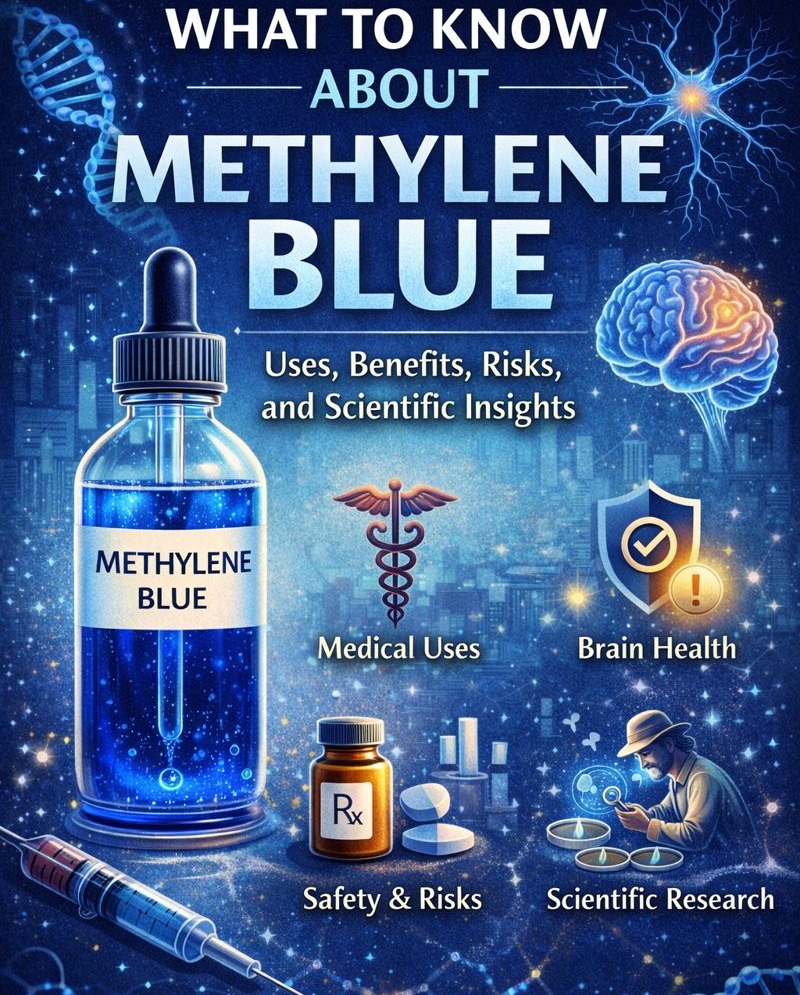
Methylene blue is a fascinating compound with a long and complex history in medicine, science, and industry. Originally synthesized in the 19th century as a textile dye, methylene blue has since evolved into a versatile substance with applications ranging from medical treatments and laboratory diagnostics to emerging research in brain health and cellular energy. In recent years, it has gained renewed attention due to claims about its potential cognitive, anti-aging, and mitochondrial benefits.
Table of Contents
What Is Methylene Blue?
Methylene blue is a synthetic chemical compound with the molecular formula C₁₆H₁₈ClN₃S. It belongs to a class of dyes known as phenothiazines and is easily recognized by its deep blue color. The compound is water-soluble and has been widely used in scientific and medical fields for over a century.
It was first synthesized in 1876 by German chemist Heinrich Caro. Initially, it was used primarily as a dye for textiles and biological staining. Soon after, scientists discovered that methylene blue had antimicrobial properties, opening the door to medical applications.
One of its most notable early uses was as a treatment for malaria in the late 19th and early 20th centuries—making it one of the first synthetic drugs used in modern medicine.
How Methylene Blue Works in the Body
Methylene blue has unique chemical properties that allow it to interact with cells in multiple ways. Its primary mechanism involves redox reactions, meaning it can donate and accept electrons. This characteristic enables it to influence cellular energy production and oxidative processes.
Key Mechanisms of Action
- Electron Transport Support
Methylene blue can act as an alternative electron carrier in the mitochondrial electron transport chain. This may help improve ATP (energy) production, especially when normal pathways are impaired. - Reduction of Oxidative Stress
At low doses, methylene blue may reduce harmful reactive oxygen species (ROS) by improving mitochondrial efficiency. - Antimicrobial Activity
It interferes with microbial enzymes and DNA, making it effective against certain bacteria, parasites, and fungi. - Enzyme Inhibition
Methylene blue inhibits enzymes like nitric oxide synthase and guanylate cyclase, which is relevant in specific medical treatments.
These mechanisms explain why methylene blue can have both therapeutic benefits and potential risks depending on dosage and context.
Approved Medical Uses of Methylene Blue
Methylene blue is FDA-approved for several medical applications. These uses are well-established and supported by clinical evidence.
1. Treatment of Methemoglobinemia
The most important and widely accepted medical use of methylene blue is in treating methemoglobinemia, a condition in which hemoglobin cannot effectively carry oxygen.
- Methylene blue helps convert methemoglobin back into functional hemoglobin
- It is often administered intravenously in emergency settings
- This use can be life-saving
2. Surgical and Diagnostic Dye
Methylene blue is commonly used as a visual dye during medical procedures.
- Helps surgeons identify tissues, lymph nodes, or fistulas
- Used in sentinel lymph node mapping
- Assists in detecting leaks in gastrointestinal or urinary surgeries
3. Treatment of Ifosfamide-Induced Encephalopathy
In certain chemotherapy patients, methylene blue is used to treat neurological side effects caused by the drug ifosfamide.
4. Antiseptic and Antimalarial Use (Historical and Limited Modern Use)
Although largely replaced by newer drugs, methylene blue still has limited use as:
- A urinary antiseptic
- A component in combination therapies for malaria in some regions
Emerging and Experimental Uses of Methylene Blue
Beyond its approved uses, methylene blue is being studied for several potential health benefits. It is important to note that many of these uses are experimental and not yet approved by regulatory authorities.
1. Brain Health and Cognitive Function
One of the most discussed emerging areas is methylene blue’s potential effect on brain function.
- It readily crosses the blood-brain barrier
- May enhance mitochondrial energy production in neurons
- Some studies suggest improvements in memory and attention at very low doses
Researchers are exploring its role in conditions such as:
- Alzheimer’s disease
- Parkinson’s disease
- Traumatic brain injury
- Age-related cognitive decline
However, results are mixed, and large-scale human trials are still limited.
2. Mitochondrial Function and Cellular Energy
Methylene blue’s interaction with mitochondria has sparked interest in longevity and metabolic research.
Potential benefits include:
- Improved ATP production
- Reduced mitochondrial dysfunction
- Enhanced cellular resilience under stress
This has led to interest in methylene blue within the biohacking and anti-aging communities, though clinical evidence is still evolving.
3. Antimicrobial and Antiviral Research
Methylene blue has shown promise in laboratory studies for its antimicrobial effects, especially when combined with light (photodynamic therapy).
Research areas include:
- Drug-resistant bacteria
- Blood product sterilization
- Certain viral inactivation processes
These uses are primarily clinical or experimental rather than consumer-based.
4. Mood and Psychiatric Research
Historically, methylene blue was explored as a treatment for depression and bipolar disorder.
- Acts as a monoamine oxidase (MAO) inhibitor
- Influences neurotransmitters like serotonin and dopamine
Due to safety concerns and drug interactions, its psychiatric use today is extremely limited and closely monitored.
Forms of Methylene Blue
Methylene blue is available in several forms, each designed for specific uses.
1. Pharmaceutical Grade
- Used in hospitals and clinics
- Strictly regulated
- Administered intravenously or orally under medical supervision
2. Laboratory Grade
- Used for staining cells and tissues
- Not safe for human consumption
3. Aquarium or Industrial Grade
- Used to treat fish infections or as a dye
- Contains impurities
- Dangerous if ingested by humans
⚠️ Only pharmaceutical-grade methylene blue is considered safe for medical use.
Dosage: Why Amount Matters
Methylene blue has a hormetic dose-response, meaning:
- Very low doses may have beneficial effects
- High doses can be toxic
In medical settings:
- Dosage is carefully calculated based on body weight and condition
- Self-dosing is strongly discouraged
Improper dosing can lead to serious side effects, including neurological and cardiovascular complications.
Side Effects of Methylene Blue
Even at therapeutic doses, methylene blue can cause side effects.
Common Side Effects
- Blue or green discoloration of urine
- Blue tint to skin or mucous membranes
- Nausea or vomiting
- Headache
- Dizziness
Serious Side Effects
- Chest pain
- Shortness of breath
- Confusion or agitation
- Hemolytic anemia (especially in G6PD deficiency)
- Serotonin syndrome (when combined with antidepressants)
Drug Interactions and Safety Warnings
Methylene blue has significant drug interactions that must not be ignored.
Antidepressants and Psychiatric Drugs
Methylene blue is a monoamine oxidase inhibitor (MAOI).
Combining it with:
- SSRIs
- SNRIs
- Tricyclic antidepressants
- Certain migraine medications
can cause serotonin syndrome, a potentially fatal condition.
G6PD Deficiency
People with glucose-6-phosphate dehydrogenase (G6PD) deficiency should avoid methylene blue.
- It can cause severe hemolysis
- Screening is recommended before use
Pregnancy and Breastfeeding
- Safety data is limited
- Generally avoided unless absolutely necessary
Is Methylene Blue Safe?
The safety of methylene blue depends entirely on:
- Dose
- Purity
- Medical supervision
- Individual health conditions
When used appropriately in medical settings, it is considered safe and effective. However, unsupervised use, especially for cognitive or anti-aging purposes, carries risks.
The growing popularity of methylene blue supplements online has raised concerns among healthcare professionals due to:
- Lack of regulation
- Incorrect dosing
- Unknown purity levels
Myths and Misconceptions About Methylene Blue
Myth 1: It Is a Cure-All
There is no scientific evidence that methylene blue cures multiple diseases on its own.
Myth 2: More Is Better
Higher doses increase toxicity and reduce benefits.
Myth 3: All Methylene Blue Is the Same
Only pharmaceutical-grade methylene blue is safe for medical use.
Future Research and Potential
Methylene blue remains an active area of scientific research. Future studies may clarify:
- Its role in neurodegenerative diseases
- Long-term safety at low doses
- Optimal dosing strategies
- Applications in mitochondrial medicine
As science advances, methylene blue may find new, carefully regulated roles in modern healthcare.
Final Thoughts
Methylene blue is a unique compound with a rich history and a wide range of applications. From life-saving emergency treatments to cutting-edge research in brain and mitochondrial health, it continues to capture scientific interest. However, its complexity demands caution.
While emerging research is promising, methylene blue is not a supplement to be used casually. Its benefits are highly dose-dependent, and its risks—especially drug interactions—are real and serious.
Anyone considering methylene blue for health purposes should do so only under qualified medical supervision. When used responsibly, it remains one of the most intriguing compounds bridging the gap between historical medicine and modern biomedical science.
About the Author