Sleep hygiene Simple practices for better rest
Introduction: Why Sleep Hygiene Matters
Sleep is not a luxury—it is a biological necessity. Yet, in today’s fast‑paced, screen‑driven, and stress‑filled world, quality sleep has become increasingly elusive. Millions of people struggle with falling asleep, staying asleep, or waking up feeling refreshed. This is where sleep hygiene comes in.
Sleep hygiene refers to a set of habits, behaviors, and environmental factors that are essential for promoting consistent, high‑quality sleep. Practicing good sleep hygiene can improve sleep duration, enhance sleep quality, boost mental clarity, strengthen immunity, and support overall physical and emotional well‑being.
This comprehensive guide explores sleep hygiene in depth—what it is, why it matters, how poor sleep affects health, and practical strategies you can use to build healthier sleep routines.
Table of Contents
What Is Sleep Hygiene?
Sleep hygiene is a collection of scientifically supported practices and lifestyle habits that help you achieve restorative and uninterrupted sleep on a regular basis. These habits influence your circadian rhythm, hormone production (especially melatonin), and your brain’s ability to relax and transition into sleep.
Sleep hygiene is not about forcing sleep; rather, it’s about creating the right conditions—mentally, physically, and environmentally—for sleep to occur naturally.
The Science of Sleep
To understand sleep hygiene, it’s important to understand how sleep works.
Sleep Cycles
Sleep occurs in cycles lasting about 90 minutes, repeated multiple times throughout the night. These cycles include:
- Non‑REM Sleep (Stages 1–3): Light sleep progressing to deep sleep, essential for physical restoration and immune function.
- REM Sleep: Associated with dreaming, memory consolidation, emotional regulation, and cognitive processing.
Disruptions to sleep hygiene interfere with these cycles, preventing the body and brain from fully recovering.
Circadian Rhythm
Your circadian rhythm is an internal 24‑hour clock that regulates sleep‑wake patterns, body temperature, hormone release, and metabolism. Poor sleep hygiene—such as irregular sleep times, excessive screen exposure at night, or late caffeine intake—can throw this rhythm out of balance.
Why Sleep Hygiene Is Important
Good sleep hygiene provides both short‑term and long‑term benefits:
- Improved concentration and memory
- Better mood and emotional stability
- Stronger immune system
- Reduced stress and anxiety
- Lower risk of chronic diseases
- Improved productivity and performance
Conversely, poor sleep hygiene is linked to insomnia, depression, obesity, diabetes, cardiovascular disease, and weakened immunity.
Common Causes of Poor Sleep Hygiene
Understanding what disrupts sleep is the first step toward improving it.
Irregular Sleep Schedule
Going to bed and waking up at different times every day confuses the circadian rhythm, making it harder to fall asleep and wake up naturally.
Excessive Screen Time
Phones, tablets, televisions, and computers emit blue light, which suppresses melatonin production and delays sleep onset.
Caffeine and Stimulants
Caffeine can stay in the body for 6–8 hours or more. Consuming coffee, energy drinks, or tea late in the day can significantly disrupt sleep.
Stress and Anxiety
Mental overactivity, worry, and emotional stress make it difficult for the nervous system to relax and enter sleep.
Poor Sleep Environment
Noise, light, uncomfortable bedding, and extreme temperatures can prevent deep, uninterrupted sleep.
The Ideal Sleep Environment
Creating a sleep‑friendly environment is a cornerstone of good sleep hygiene.
Bedroom Setup
- Keep the bedroom dark using blackout curtains or eye masks
- Maintain a cool temperature (around 18–22°C or 65–72°F)
- Reduce noise with earplugs or white noise machines
- Use a comfortable mattress and supportive pillows
Bed Is for Sleep Only
Avoid using the bed for work, studying, or scrolling on your phone. This helps the brain associate the bed strictly with sleep and relaxation.
Sleep Hygiene Habits for Better Sleep
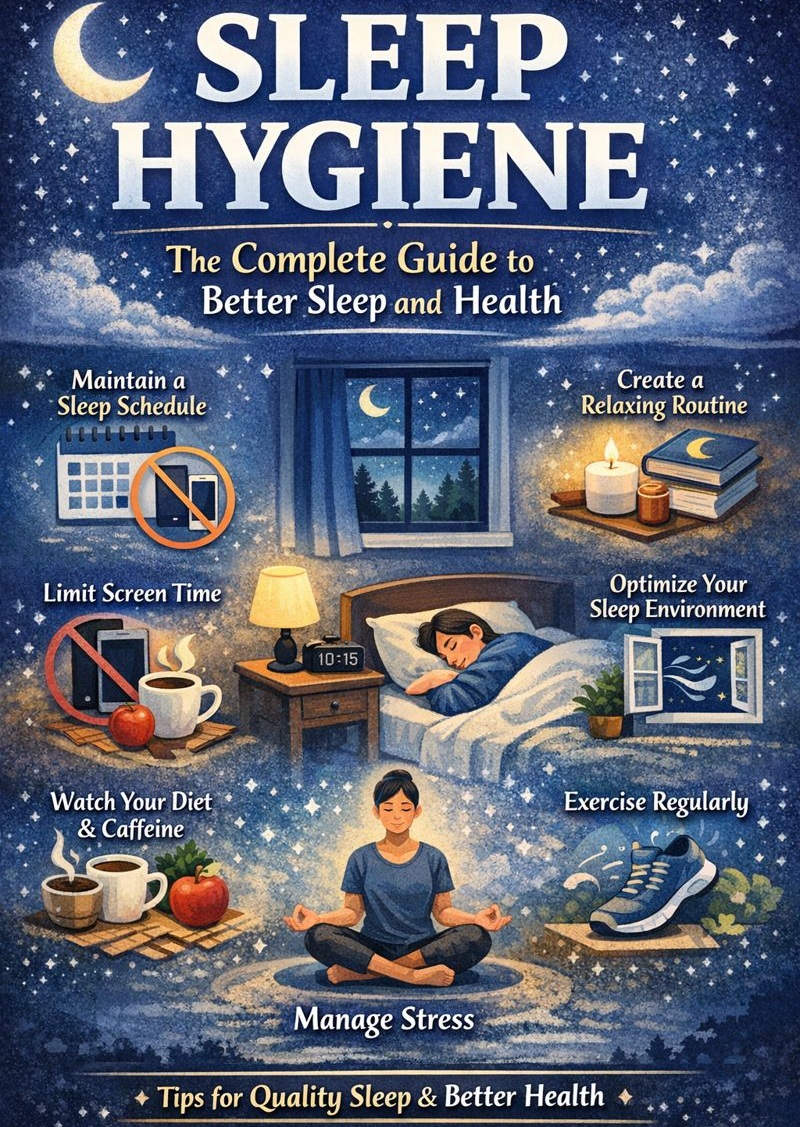
Maintain a Consistent Sleep Schedule
Go to bed and wake up at the same time every day—even on weekends. Consistency strengthens your circadian rhythm and improves sleep efficiency.
Create a Relaxing Bedtime Routine
A calming routine signals to your body that it’s time to sleep. Examples include:
- Reading a book
- Gentle stretching or yoga
- Deep breathing or meditation
- Taking a warm bath or shower
Limit Screen Exposure Before Bed
Avoid screens at least 60 minutes before bedtime. If unavoidable, use blue‑light filters or night mode settings.
Watch What You Eat and Drink
- Avoid caffeine after mid‑afternoon
- Limit alcohol before bedtime (it disrupts REM sleep)
- Avoid heavy meals close to bedtime
Physical Activity and Sleep Hygiene
Regular physical activity promotes deeper and more restorative sleep. Exercise helps reduce stress, regulate hormones, and support circadian rhythms.
However, intense exercise too close to bedtime can be stimulating. Aim to finish workouts at least 3–4 hours before sleep.
Mental Health and Sleep Hygiene
Sleep and mental health are deeply connected. Anxiety, depression, and chronic stress often coexist with sleep problems.
Techniques to Calm the Mind
- Journaling worries before bed
- Practicing mindfulness or guided meditation
- Progressive muscle relaxation
- Limiting exposure to stressful news at night
Addressing mental health concerns alongside sleep hygiene can significantly improve sleep quality.
Sleep Hygiene for Different Age Groups
Children and Teenagers
Young people need more sleep, but screen use, academic pressure, and irregular schedules often interfere.
Tips:
- Set consistent bedtimes
- Limit screen use in the evening
- Encourage physical activity during the day
Adults
Work stress, lifestyle habits, and responsibilities often affect adult sleep.
Tips:
- Prioritize sleep as part of self‑care
- Manage work boundaries
- Practice stress‑reduction techniques
Older Adults
Aging naturally changes sleep patterns, leading to lighter sleep and earlier awakenings.
Tips:
- Maintain regular routines
- Get natural sunlight exposure
- Avoid daytime naps longer than 30 minutes
Sleep Hygiene and Insomnia
Insomnia is often driven by poor sleep habits and negative sleep associations. Improving sleep hygiene is a foundational treatment for insomnia.
Cognitive Behavioral Therapy for Insomnia (CBT‑I)
CBT‑I combines sleep hygiene with cognitive strategies to address unhelpful thoughts and behaviors related to sleep. It is considered the most effective long‑term treatment for chronic insomnia.
Technology and Sleep Hygiene
While technology can disrupt sleep, it can also support better sleep hygiene when used wisely.
Helpful tools include:
- Sleep tracking apps
- White noise machines
- Meditation and relaxation apps
The key is intentional use and avoiding over‑reliance on devices before bedtime.
Myths About Sleep Hygiene
“I Can Catch Up on Sleep Later”
Sleep debt cannot be fully repaid. Chronic sleep loss has cumulative effects on health.
“Alcohol Helps You Sleep”
Alcohol may induce drowsiness but disrupts sleep quality and REM cycles.
“Everyone Needs the Same Amount of Sleep”
Sleep needs vary, but most adults require 7–9 hours per night.
Building a Personalized Sleep Hygiene Plan
Improving sleep hygiene is not about perfection—it’s about consistency and awareness.
Steps to build your plan:
- Identify habits disrupting your sleep
- Adjust your environment
- Establish a bedtime routine
- Track sleep patterns
- Make gradual, sustainable changes
When to Seek Professional Help
If sleep problems persist despite good sleep hygiene, consult a healthcare professional. Underlying conditions such as sleep apnea, restless leg syndrome, or mental health disorders may require medical attention.
Conclusion: Sleep Hygiene as a Lifestyle Choice
Sleep hygiene is one of the most powerful and accessible tools for improving overall health. By making intentional changes to your daily habits, environment, and mindset, you can transform your sleep quality and, in turn, your quality of life.
About the Author