What Is Zero Waste
Introduction:What Is Zero Waste?
As the world confronts growing environmental challenges, the concept of zero waste has emerged as a powerful solution for building a more sustainable future. But what is zero waste, and why has it become so important today?
The zero waste approach focuses on reducing waste at its source, rethinking consumption habits, and keeping resources in use for as long as possible. By shifting away from wasteful systems and embracing sustainability, zero waste management offers a meaningful response to global environmental concerns. In this blog, we explore the zero waste definition, the purpose of the movement, and practical ways to adopt a zero waste lifestyle.
Table of Contents
What Does Zero Waste Mean?
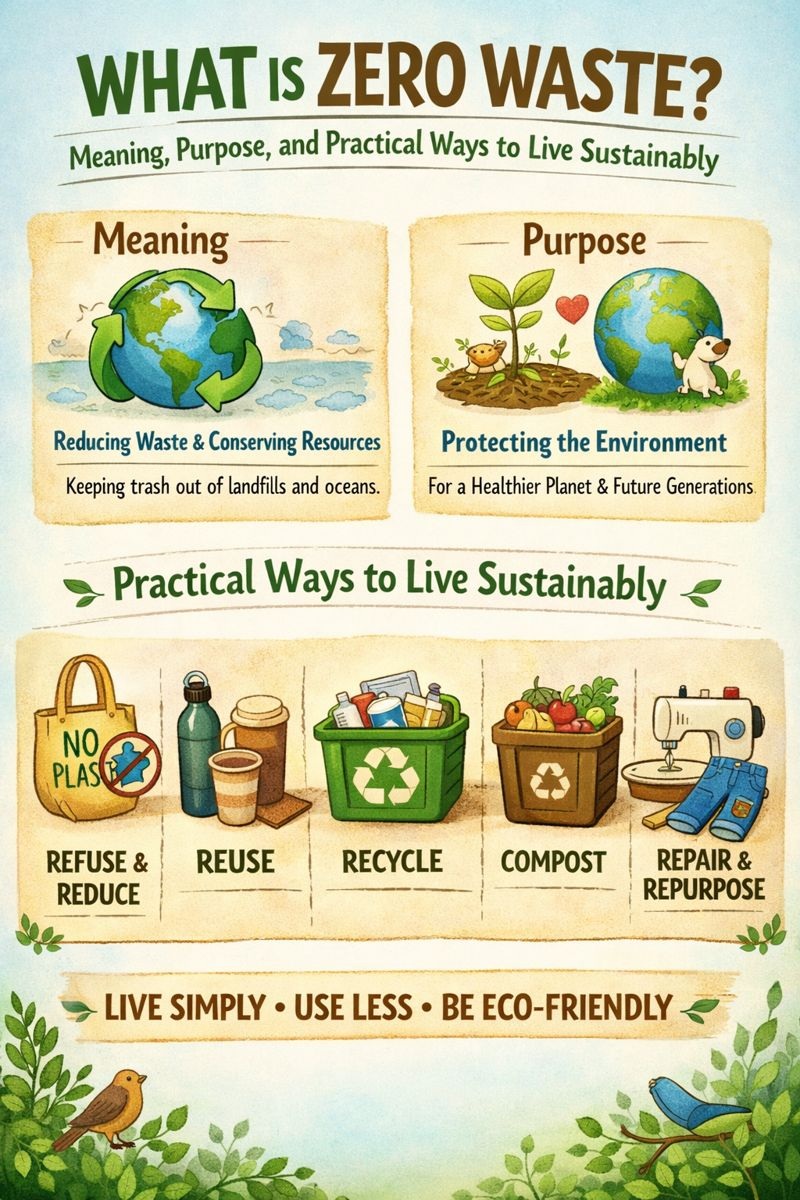
Zero waste is both a philosophy and a goal that encourages the design of systems and lifestyles where materials are continuously reused, repaired, or recycled—so nothing ends up in landfills or incinerators. Rather than accepting waste as unavoidable, zero waste challenges individuals, businesses, and governments to prevent it altogether.
At its core, zero waste promotes a shift from the traditional linear economy—where resources are taken, used, and discarded—to a circular economy, where materials are kept in circulation. This philosophy emphasizes responsible consumption, ethical resource use, and long-term environmental sustainability.
What Is the Zero Waste Movement?
The zero waste movement began as a grassroots initiative led by environmental activists seeking alternatives to the excessive waste generated by modern industrial society. Over time, it evolved into a global movement supported by communities, organizations, and governments worldwide.
Zero waste management encourages individuals to adopt mindful habits while urging businesses to redesign products for durability, reuse, and recyclability. Communities implement local waste-reduction programs, while governments introduce policies such as plastic bans and recycling incentives. Together, these efforts form a system where waste is minimized and resources are valued.
What Is the Purpose of Zero Waste?
The primary aim of zero waste is to drastically reduce the amount of waste sent to landfills and incinerators. However, the purpose of zero waste extends far beyond waste reduction. It supports broader sustainability goals such as climate action, biodiversity protection, and responsible resource management.
Key Objectives of Zero Waste:
Minimizing Environmental Impact
Reducing waste lowers plastic pollution, cuts greenhouse gas emissions, and protects ecosystems from harmful disposal practices.
Conserving Natural Resources
Reusing and recycling materials reduces the demand for raw resources and saves energy used in production and transportation.
Encouraging Sustainable Design
Zero waste drives innovation by pushing industries to create eco-friendly, long-lasting, and repairable products.
Strengthening Communities
Local zero waste initiatives generate employment, support education, and promote community engagement, creating social and economic benefits.
Ultimately, zero waste asks us to rethink our relationship with resources and prioritize sustainability over convenience.
How Does the Zero Waste Movement Work?
The zero waste movement follows the 7R principles:
1. Rethink
Evaluate your purchasing choices and their environmental impact.
Example: Support brands committed to sustainability.
2. Refuse
Say no to unnecessary items, especially single-use products.
Example: Refuse plastic straws or promotional freebies.
3. Reduce
Consume less and choose durable, high-quality products.
Example: Buy only what you need and avoid excessive packaging.
4. Reuse
Extend the life of products by using them multiple times.
Example: Use refillable bottles, cloth bags, or repurpose containers.
5. Repair
Fix broken items instead of discarding them.
Example: Mend clothes or repair electronics.
6. Regift
Pass on items you no longer need to someone who can use them.
Example: Donate usable goods or unwanted gifts.
7. Recycle
Recycle materials responsibly according to local guidelines when reuse is not possible.
Education and awareness are essential to zero waste management. Workshops, campaigns, and community programs help people understand the benefits of zero waste and adopt sustainable habits.
Examples of Zero Waste in Daily Life
Zero waste can be practiced in everyday activities:
- Using reusable products like stainless steel bottles, glass containers, and cloth bags
- Composting organic waste such as food scraps and garden waste
- Repairing and upcycling old or damaged items
- Buying in bulk to reduce packaging waste
- Businesses adopting zero waste practices through recycling systems, energy efficiency, and take-back programs
These examples show that the zero waste definition is achievable through both individual and organizational efforts.
Tips for Living a Zero-Waste Lifestyle
Begin by replacing disposable items with reusable alternatives. Declutter your home responsibly by donating or repurposing items instead of throwing them away. Compost organic waste to reduce landfill burden and enrich the soil. Shop from bulk or zero-waste stores and explore DIY options for household cleaners and personal care products. Most importantly, educate yourself and inspire others to reduce waste.
Small, consistent actions can create a significant impact over time.
The Future of Zero Waste
The future of zero waste looks promising as awareness increases and sustainability becomes a global priority. Advances in recycling technology, sustainable product design, and circular economies will continue to support waste reduction efforts.
Collaboration will be essential. Governments, businesses, and communities must work together to build systems that support zero waste, while consumers play a vital role by choosing sustainable products and holding brands accountable.
Conclusion
By embracing zero waste principles, we contribute to a healthier and more sustainable planet. Whether through small lifestyle changes or large-scale initiatives, every step toward zero waste management makes a difference.
Join Banyan Nation in advancing plastic recycling in India and be part of a future where resources are respected, waste is minimized, and the planet thrives for generations to come.
About the Author